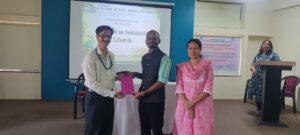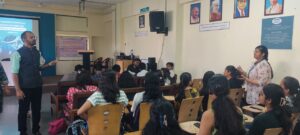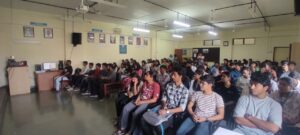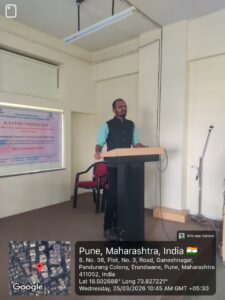

The ESG Committee of Kaveri College of Arts, Science, and Commerce organized an informative session on Sustainable Lifestyle on 25 March 2026. The session aimed to raise students’ awareness of the importance of adopting environmentally responsible habits in daily life.
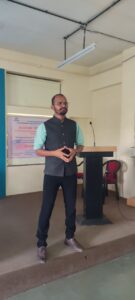
Mr. Prafull Pawar, a Research Associate at MIT World Peace University, was invited as the resource person for the session. He delivered an insightful talk on the importance of adopting a sustainable lifestyle in today’s rapidly changing world. He emphasized how individual actions play a crucial role in protecting the environment and highlighted practical ways to incorporate sustainability into daily life.
He spoke about reducing carbon footprints, conserving natural resources, and minimizing waste through simple habits such as energy conservation, responsible consumption, and avoiding single-use plastics. He also encouraged students to be more environmentally conscious and to take small but meaningful steps toward sustainability. Mr. Pawar further explained the long-term impact of unsustainable practices and stressed the need for collective responsibility in addressing environmental challenges.
The session also explored successful global examples of sustainability. Countries like Japan and Sweden have implemented efficient waste management and recycling systems, while Netherlands promotes cycling as a primary mode of transport, reducing pollution and encouraging healthier lifestyles. Additionally, the Mumbai Dabbawala system was highlighted as an eco-friendly and efficient delivery model with minimal carbon emissions.
In conclusion, the session emphasized that adopting a sustainable lifestyle is no longer optional but a necessity. Even small actions, when practiced consistently, can lead to meaningful change. By learning from global examples and making conscious choices in daily life, individuals can contribute towards building a sustainable future and preserving the environment for generations to come. The session was interactive and engaging, inspiring students to adopt eco-friendly practices and work towards a greener and more sustainable future.