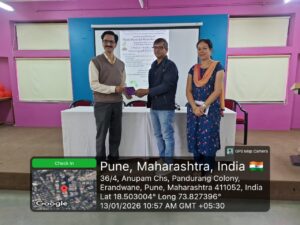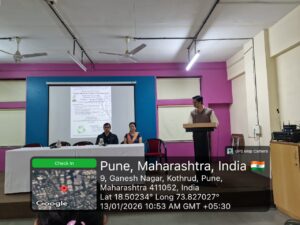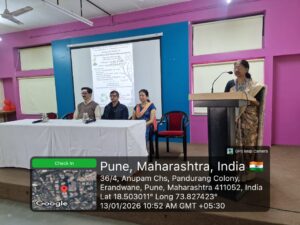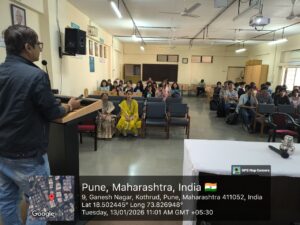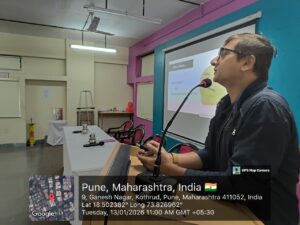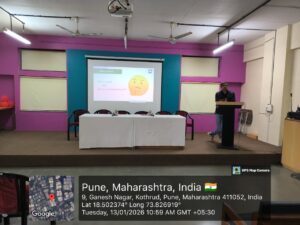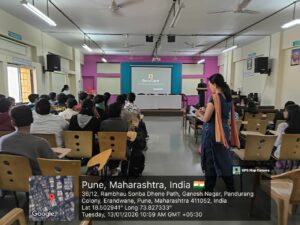

An Awareness Session on Plastic Waste and E-Waste Management and Its Environmental Impact was organized for the students in association with ServCare, Pune on 13 January 2026 at 10.30 a.m. The session was conducted by Mr. Avinash Jadhav, who is currently associated with Muskmelon Envtech Pvt. Ltd., where he has been handling operations and digital product initiatives for the past four years. With an overall experience of 14 years across automotive, electronics, IT, and consulting sectors, Mr. Jadhav shared valuable industry-oriented insights.
Muskmelon Envtech Pvt. Ltd. is a sustainability technology–driven organization working towards educating citizens and institutions on responsible waste management practices across multiple waste streams such as plastic waste, e-waste, used cooking oil, and textile waste. The organization also partners with IT companies, manufacturing units, and educational institutions to help them achieve their sustainability goals.
During the session, the resource person provided a detailed explanation of electronic waste (e-waste), its sources such as discarded computers, mobile phones, televisions, batteries, and household appliances, and the environmental and health hazards associated with improper disposal. He emphasized that e-waste contains both hazardous substances and valuable recoverable materials.
Mr. Jadhav explained the material recovery process from e-waste, highlighting that components such as printed circuit boards contain precious and base metals. He discussed how copper, gold, silver, aluminium, palladium, and other metals are scientifically extracted through authorized recycling processes. The session highlighted that one tonne of e-waste can contain significantly higher concentrations of gold and copper than natural ores, making recycling both environmentally and economically beneficial.
The speaker also shared facts and figures related to e-waste generation, stressing that improper handling of e-waste leads to soil and groundwater contamination and poses serious health risks. He emphasized the importance of formal recycling channels, extended producer responsibility (EPR), and individual responsibility in ensuring safe e-waste disposal.
Along with e-waste, the session covered plastic waste management, including types of plastics, their recyclability, and the step-by-step recycling process. Students were encouraged to practice waste segregation at source, reduce the use of single-use plastics, and support authorized recyclers.
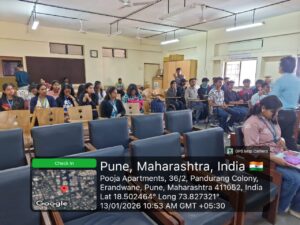
The session was highly interactive, with students actively participating and engaging in discussions. The resource person addressed queries effectively and motivated students to adopt sustainable and environmentally responsible practices.
Overall, the awareness session was informative, insightful, and impactful, significantly enhancing students’ understanding of sustainable plastic and e-waste management.