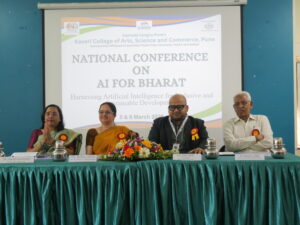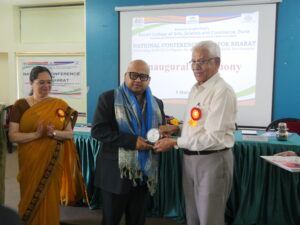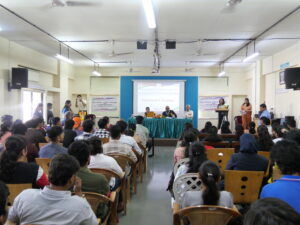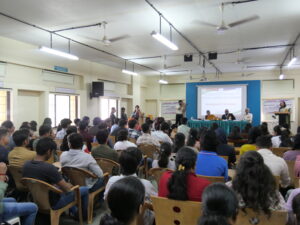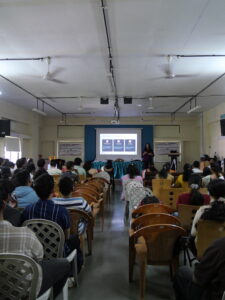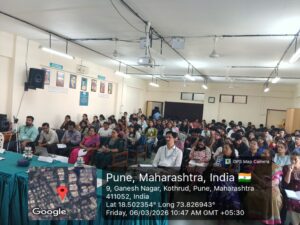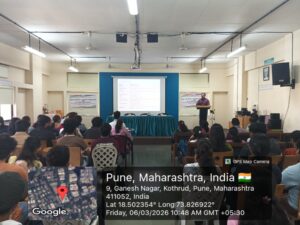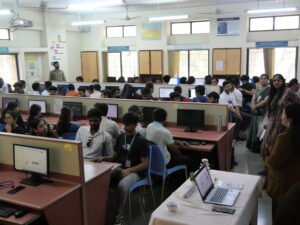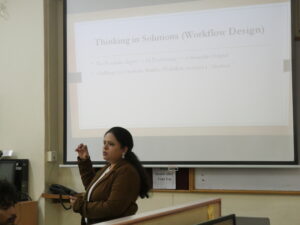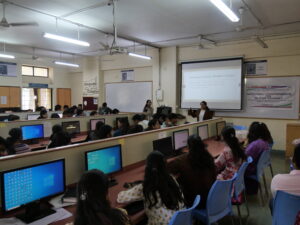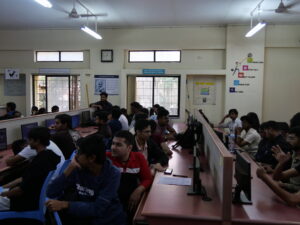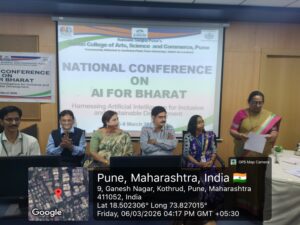

Kaveri College of Arts, Science and Commerce organized a Two Days National Level Conference on “AI for Bharat” Harnessing Artificial Intelligence for inclusive and Sustainable Development” to explore the role of Artificial Intelligence in education, industry, and societal development. The conference was inaugurated in the presence of distinguished dignitaries Dr.Narayan Hegde, Vice President of Kannada Sangha Pune, Mrs. Radhika Sharma, Joint Treasurer of Kannada Sangha Pune, Dr. Mukta Karmarkar, Principal of the college, Dr. Anand Buddhikot, Vice Principal, Mrs. Chitra Alavani, IQAC Head and Co-Convenor, and Mrs. Pallavi Joshi, M.Sc. CS Coordinator and Co-Convenor.
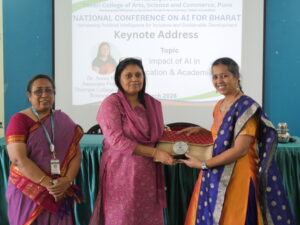
The Chief Guest, Dr. Amit Andre, CEO of Data Tech Labs, delivered the keynote address on “AI for Bharat,” emphasizing that Artificial Intelligence should be viewed as a mindset focused on solving real-world problems.
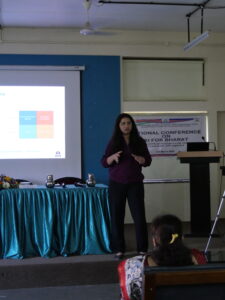
The second session was delivered by Mrs.Annie Rajan, Associate Professor at Dhempe College of Arts and Science, on the topic “AI in Education and Academics.” She explained the role of Artificial Intelligence and Natural Language Processing in understanding human language and supporting education and linguistic research. She also highlighted her work on developing digital tools and linguistic resources for the Konkani language.
The third session was conducted by Mrs. Savitha Bhat, Senior Scientist at Tata Consultancy Services, on “AI for Industry Research.” She explained how AI is transforming industrial research by solving real-world problems through structured AI pipelines and advanced technologies. She also discussed the importance of practical implementation and collaboration between human expertise and machine intelligence.
The next day fourth session was delivered by Dr. Shrirang Sahasrabudhe, Global Lead at Educational Testing Service, New Jersey, USA. His talk focused on “AI for Inclusiveness” highlighting the need to design AI systems that are accessible to people with disabilities and users from diverse backgrounds. He emphasized the importance of multilingual interfaces, accessibility tools, and explainable AI to ensure technology benefits everyone.
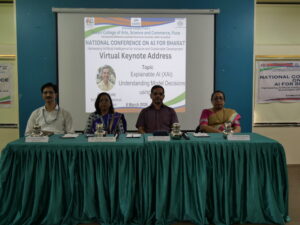
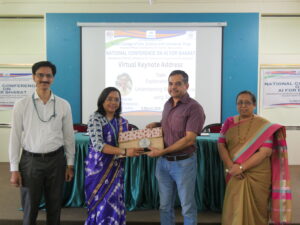
Another session was delivered by Mr.Atul Kahate, an IT professional and AI/ML trainer, on Explainable Artificial Intelligence (XAI). He explained that many AI systems function as “black boxes” making their decisions difficult to interpret. He introduced techniques such as LIME and SHAP that help explain AI models and make them more transparent and trustworthy.
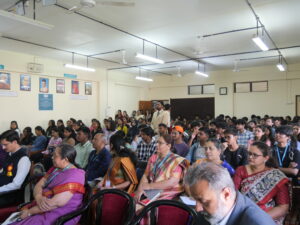
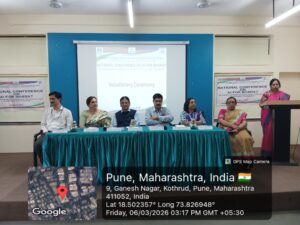
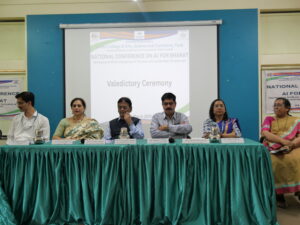
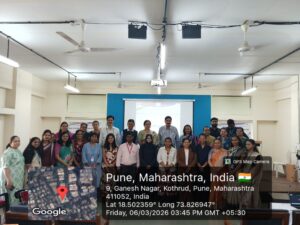
The conference concluded with the Valedictory Programme attended by Dr. Balajith Shetty, Dr. Chandrahas Shetty, and Mrs. Devika Shetty, Trustees of Kannada Sangha Pune. Mrs. Chitra Alavani presented a brief review of the two-day National Level Conference. She highlighted that more than 40 research papers were presented during the event. Participants from different colleges affiliated with renowned universities across Goa, Maharashtra, Karnataka, Haryana, and Rajasthan attended the conference, reflecting its national reach. Participants also shared their feedback and appreciated the academic discussions held during the conference. Dr. Balajith Shetty, Trustee of Kannada Sangha Pune, emphasized that Artificial Intelligence should reach farmers, shopkeepers, and villagers, ensuring that technology benefits every section of society.
The research paper presentations were evaluated by Dr. Manisha Bharambe, Vice-Principal and Associate Professor at MES Abasaheb Garware College, and Mrs. Ranjana Sanjay Shevkar from Modern College, Pune.
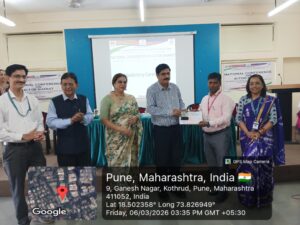
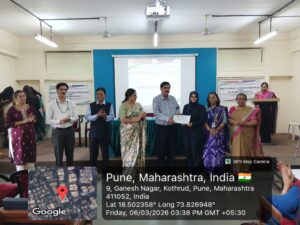
The Best Paper Award (Faculty Category) was presented to Dr. Anil Swami from MIT College, Alandi. The Best Paper Award in the (Student Category) was given to Abhishek Parihar for his research paper titled “AI-Driven Predictive Battery Management System for Extended Lifecycle in Electric Two-Wheeler Batteries.” The valedictory programme successfully concluded the two-day National Conference on “AI for Bharat,” highlighting valuable research contributions and meaningful academic discussions. The event reinforced the importance of using Artificial Intelligence for inclusive development and ensuring that technological advancements benefit every section of society.